
70%
Of shoppers who reach checkout never complete the purchase. Not because of price or competition — because unresolved doubt stops them at the last moment.
About 70% of shoppers who reach a checkout page never complete their purchase. Not because they chose a competitor. Not because the price was wrong. Because something on the page gave them a reason to hesitate.
Here is the thing most checkout guides miss: by the time a customer reaches checkout, they have already decided to buy. They added the item. They clicked through. The sale was done.
The checkout page's job is not to persuade them. It is to stop them from changing their mind. That is a completely different writing job. It requires completely different copy.
This article covers the best checkout page examples, what the copy on each one is actually doing, and a practical guide to writing checkout copy that holds the sale.
What Checkout Copy Actually Does
Sales pages persuade. Landing pages capture. Checkout pages resolve.
By the time someone hits checkout, the battle for attention and desire is over. What remains is doubt: the small, quiet voice that says "but what if..." That voice is responsible for most abandoned carts.
Every word on a checkout page is doing one of two things: removing a reason to hesitate, or adding one. Generic copy like "Secure checkout," "Buy now," and "Processing your order" adds friction because it answers no question the customer is actually asking.
The best checkout pages treat the final step of the funnel as a conversation with an anxious buyer, not a form to fill out. They name the fears and they resolve them, in the same copy. That distinction separates a sales page (which earns the desire) from a checkout page (which earns the final yes).
Four Doubts Every Checkout Page Must Address
Most last-minute abandonment comes from one of four places. A checkout page that resolves all four will outperform one that resolves none, regardless of price, design, or traffic quality.
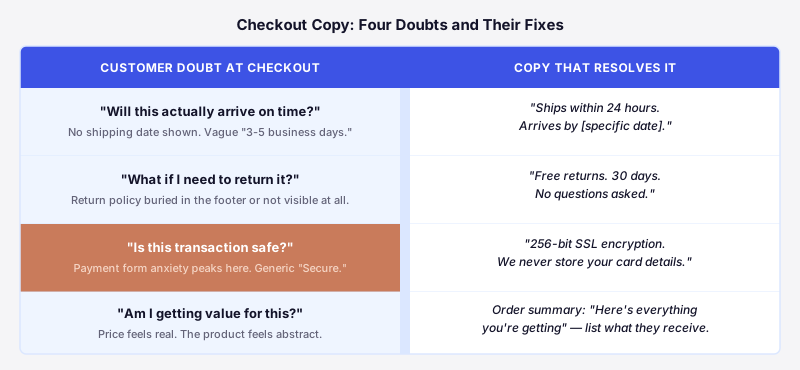
Shipping doubt. "Will this actually arrive when I need it?" Vague language like "3-5 business days" gives the customer nothing to hold onto. A specific date ("Ships within 24 hours. Arrives by Thursday, May 1") turns uncertainty into a commitment.
Return doubt. "What if I need to send this back?" If the return policy is not visible on the checkout page, the customer will either open a new tab to find it (and sometimes not come back) or absorb the anxiety as friction. A one-line reassurance, positioned near the payment button, does the work: "Free returns. 30 days. No questions asked."
Security doubt. This is the peak anxiety moment. The customer is about to hand over their card details to a website. Generic "Secure checkout" signals mean nothing. Specific copy does: "256-bit SSL. We encrypt your information and never share it." Place this directly under the payment field, where the anxiety lives.
Value doubt. Price becomes very real at checkout. The product can feel abstract again. A clear order summary that lists what the customer is receiving (not just the item name and price) reminds them of the trade they agreed to. "Here's everything you're getting" followed by a list of deliverables, bonuses, or features keeps the value proposition present at the moment the wallet opens.
Best Checkout Page Examples
Modern Mammals. This men's shampoo brand added a "cancel anytime" notice to their checkout page for subscription products. It seems counterintuitive: why remind someone they can cancel? But the copy addressed a specific fear the customer was already feeling: "What if this is irreversible?" When cancellation felt easy, completion felt easier. The paradox works because the doubt was real and the copy answered it directly.
Rooted (Dutch home goods). This sustainable home goods brand was running a 1.1% checkout conversion rate against a category average of 2.2% to 2.8%. The gap represented roughly €28,000 in monthly revenue their marketing was generating but their checkout was losing. The fix combined copy changes with structural simplification: clearer shipping language, a visible guarantee, and a stripped-down header that removed exit opportunities at the critical moment.
Monica Badiu's course business case study. A single copy change on an order bump at checkout produced a 14% increase in order bump conversion. The change was not a redesign. It was a wording adjustment on one line of copy that more precisely named what the buyer would get and why it mattered at this moment. The checkout page was already functional. The copy was not pulling its weight.
The pattern across all three: they identified the specific doubt their customers were feeling and wrote directly to it. Not generic reassurance. Not visual trust badges. Words that answered the actual question in the buyer's head.
Checkout Copy Best Practices
Before
“Buy now · Pay $297 · Secure checkout”
After
Complete my order · Your information is encrypted and never shared · Free returns, 30 days, no questions asked
CTA button copy. "Complete my order" outperforms "Buy now" because it frames the action as finishing something already started rather than initiating a transaction. "Get instant access" works for digital products. "Place my order" is neutral but specific. Avoid any phrasing that emphasizes the cost ("Pay $149") over the outcome.
Guarantee headline. Be specific about time, scope, and process. "30-day money-back guarantee, no questions asked" is better than "satisfaction guaranteed." The specificity is the reassurance: it tells the customer exactly what they can rely on.
Security microcopy. Position it directly below the payment field, not in the footer. The anxiety peaks when the card number field is active. That is where the copy needs to be. Keep it short and factual: "Your information is encrypted and never shared."
Order summary. List what they receive, not just what they are paying. "1× Annual subscription ($297)" is less reassuring than "1× Annual subscription ($297): includes unlimited research sessions, full export history, and priority support." Both cost the same. One reminds the buyer why they said yes.
Shipping copy. Specificity reduces uncertainty. "Ships by tomorrow, May 2" beats "Estimated delivery: 3-5 business days." If your client can commit to a date, use it. If they cannot, use a range anchored to a specific starting point: "Ships within 1 business day. Most customers receive within 3 days."
For how to translate customer language into copy that addresses these specific fears, read how to use customer language in copy.
The Research Before You Write
The copy that resolves doubt only works if you know which doubts are actually present. Before writing a word of checkout copy for a client, answer these three questions.
What is the number one reason people abandon at this specific checkout? Not industry averages. This client's actual abandonment data. Post-purchase surveys, exit surveys, support chat logs, and heatmaps all give different signals. The answer changes the priority of what you write.
What is the top question the support team gets about orders? This is usually a doubt that was not answered on the checkout page. The most common support question is almost always the copy gap.
What are customers saying about the purchase experience in reviews? One-star reviews that mention checkout, payment, or delivery issues are a direct list of the doubts the copy needs to address.
If this research is not available yet, PhraseMine surfaces Reddit conversations about buying experiences in the relevant category, including threads where real customers describe exactly what made them hesitate or abandon. That language is your raw material before the first draft.
For a framework on what to ask a client before writing any copy, read the two research tracks every copywriter needs.
Find what your client's buyers say right before they abandon
PhraseMine analyzes real Reddit conversations about buying in any category. Find the exact hesitations, doubts, and last-minute concerns that stop people at checkout.
Try PhraseMine freeCheckout Page Mistakes That Kill Conversions
Generic trust signals with no specifics. A padlock icon and the word "Secure" do not answer "Is this site safe?" They acknowledge the question exists without resolving it. Replace visual trust symbols with specific copy whenever possible.
CTA that emphasizes cost over outcome. "Pay $297 now" makes the money feel like a loss. "Start your annual plan ($297)" frames the same transaction as beginning something. "Get everything included ($297)" works even better for bundles.
No information about what happens next. After the buyer clicks the button, they enter a few seconds of pure anxiety. What is loading? Is it processing? Did it go through? Copy like "You'll receive a confirmation email within 60 seconds" turns that blank moment into a bridge. Removing it creates a void where doubt lives.
Multiple competing offers at checkout. Order bumps and upsells can increase revenue. But when they land before the primary doubt has been resolved, they add decision fatigue instead. Resolve the four core doubts first, on the checkout page itself, before introducing anything new.
The fastest way to find what your client's buyers are specifically anxious about before purchase is to find the conversations they are already having. PhraseMine pulls those Reddit threads and organizes them by theme, so you can walk into a checkout copy project knowing exactly which doubts need addressing.
For more on writing copy that works within a specific purchase moment, read landing page vs sales page for how to identify which format your client actually needs at each point in their funnel.
A Quick Copy Audit for Any Checkout Page
Before rewriting, run this audit. It takes under ten minutes and surfaces the biggest gaps.
- Does the page name a specific shipping date or range? If not, fix this first.
- Is the return or cancellation policy visible without scrolling? If not, add a one-liner near the button.
- Does the security copy appear within 20px of the payment field? If not, move it.
- Does the order summary describe what the buyer receives, or just what they are paying? If the latter, add a benefit line.
- Does the CTA button copy name an action or a cost? If it leads with cost, rewrite it.
Run the audit before writing. It will tell you which of the four doubts the current copy is already addressing and which ones it is ignoring entirely.
The Last Thing They Read
The checkout page is the last thing a customer reads before they trust you with their money. Every vague line, every missing reassurance, every button that says "Pay" instead of "Complete" is a reason to stop.
The copy's job is not to sell. It is to hold. Write every line as if the buyer is one hesitation away from closing the tab. Because they are.